Diteq
Construction Products Tile & Stone ProductsDustless Products Resource Center Tradeshows About Us Contact Us Play Video

Ask Dan
Resource Center - About Diamond Blades

How Diamond Blades Work
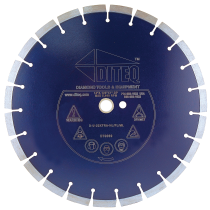
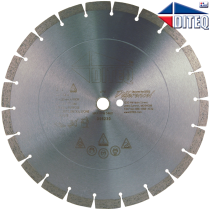
Diamond blades provide cutting through mutual erosion of the material (concrete, etc.) and the segment, or rim, of the diamond blade. Diamond crystals are embedded throughout a blade's rim, suspended in a metal matrix. As the crystals either get crushed or fall out of the rim, it is essential that the matrix wears down at an optimal rate to expose new diamond to continue efficient cutting. If the matrix fails to wear down fast enough, the rim will glaze over and cutting will become much more difficult and slow. If the matrix wears down too quickly, crystals will be lost before their usefulness has expired. The blade may appear to cut very fast, but the life of the blade will be greatly shortened.

Years of experience, extensive testing and experimentation have gone into developing the DITEQ diamond blade line. If you have any questions about which blade to use for a particular application, just give us a call or contact us (link to contact page) - we'll be glad to help you with a recommendation.

The Rule to Remember
Soft blades cut hard materials, and hard blades cut soft materials. As a general rule, you need a blade with a softer matrix to cut hard, less abrasive materials such as cured concrete, brick, tile or stone. Conversely, you need a blade with a harder matrix to resist the excessive abrasion of softer materials such as green concrete, asphalt or block.

Defining Value
You want an optimum balance between cutting speed and blade life to get the best overall value for your blade.

Wear-Rate Factors
A number of factors affect the wear rate of rims and overall performance of diamond blades. These include:

• The hardness of the metal matrix
• The quality of the diamond crystals
• The density of the crystals within the matrix
• The hardness of the material being cut
• The abrasiveness of the material being cut
• The horsepower of the saw being used
• The RPM's of the blade
• Cutting depth
• Cutting pressure

Blade Life vs Cutting Speed
Typically, there is an inverse relationship between cutting speed and blade life. If a saw operator makes a change, such as increasing cutting pressure to make a blade cut faster, blade life will tend to be shortened as a result. Likewise, if an operator wanted to extend the blade's life, he could reduce cutting pressure and cut slower. Each job is different and labor cost also needs to be added to the equation to arrive at the most cost-efficient solution.

What is right for me?
Professional contractors tend to have larger projects and higher labor costs, and typically lean toward blades and equipment that cut faster. Rental customers often have smaller jobs and rent for the diamond blade is calculated by the amount of wear on the rim. Consequently, choosing blades and equipment that provide slightly slower cutting, with less wear on the blade is often a good choice.

Special Sizes and Custom Orders
If you can't find what you are looking for in this catalog, give us a call. We manufacture a wide array of diamond tools, and not all are featured in this catalog. We also welcome custom orders.

Click here** to view our Blade Specification Guide.

Get Acrobat Reader   **To view these files, you will need Adobe Acrobat Reader. Click on the button to download the free software now.


ARIX Diamond Arrangement Technology

Learn how a diamond blade that delivers 30% more blade life and 50% faster cutting speeds is changing the industry.


Home | Construction Products | Tile & Stone Products | Resource Center | Tradeshows | About Us | Contact Us